
Choosing the right small subpanel for a garage starts with understanding how much electrical capacity you need and how many circuits you want to install. Whether you’re setting up a compact garage workshop, adding outlets near a workbench, or bringing electricity to a detached shed, the right breaker panel can make your electrical system easier to organize and expand.
For many small garage projects, a 60-amp or 100-amp feeder may be worth evaluating, while a 70A-rated panel may also be an option depending on the product. However, the panel’s amperage rating is only one part of the decision. You also need to consider breaker spaces, feeder capacity, enclosure type, and compatibility with the breakers you plan to use.
In this guide, I’ll explain how to compare small garage subpanels, what to look for in a 70A–100A breaker panel, and how to choose a suitable small breaker panel for a shed.
What Is a Small Subpanel for a Garage?
A small subpanel is a secondary electrical distribution panel connected to an upstream electrical panel through a feeder.
Its purpose is to provide a convenient location for distributing electricity to additional branch circuits. Instead of routing every new garage circuit back to the home’s main panel, you can have a separate panel closer to the area where the electricity is needed.
A garage subpanel may supply circuits for:
- General-purpose electrical outlets
- LED shop lighting
- Workbench receptacles
- Battery chargers
- Garage door openers
- Small power tools
- Other equipment requiring dedicated circuits
One important detail: a subpanel does not create additional electrical capacity. It provides more physical breaker spaces and a convenient distribution point.
For example, installing a 100-amp-rated load center does not mean your garage automatically has 100 amps available. The actual capacity depends on the feeder, its overcurrent protection, and the available capacity of the existing electrical service.
Understanding this difference will help you avoid buying a panel based on an amperage number alone.
What Size Subpanel Do You Need for a Small Garage?
There isn’t one panel size that works for every garage.
The right choice depends on the electrical load, the equipment you plan to use, the number of branch circuits, and whether the garage is attached to or detached from your house.
When comparing panels, separate two decisions:
- Panel rating: The maximum rating of the panel’s bus and its approved configuration.
- Feeder capacity: The amount of electricity the upstream electrical system is designed and protected to supply.
These ratings must be compatible, but they don’t necessarily have to be identical.
60-Amp Subpanel for a Small Garage
A 60-amp feeder may be worth considering for a basic garage setup with lighting, general outlets, battery chargers, and a limited number of smaller tools.
It may be a reasonable starting point when you don’t expect to operate several high-demand machines at the same time.
However, adding equipment later can change the electrical requirements. Before selecting a 60A installation, have the expected loads evaluated rather than assuming that a certain number of outlets will automatically fit within the available capacity.
If you choose a 100A-rated panel supplied by a properly designed 60A feeder, the larger panel rating can provide additional bus capacity and breaker spaces without increasing the actual feeder capacity.
70-Amp Subpanel for a Garage
A 70A-rated subpanel may be suitable for certain small workshop applications, depending on the manufacturer’s specifications.
When comparing a 70A breaker panel, check whether 70 amps refers to the bus rating, the main breaker, or another product specification.
These are not interchangeable.
Also check the available breaker positions. A panel with a suitable amperage rating but insufficient spaces may not be the best purchase for a garage where you plan to add lighting, outlets, and additional equipment.
100-Amp Subpanel for a Garage
A 100-amp-rated subpanel can be a practical choice when you want more flexibility for future garage electrical projects.
It may provide room for additional branch circuits serving:
- Multiple workbench outlets
- Separate lighting circuits
- Battery charging stations
- A small air compressor
- Additional workshop equipment
- Future electrical additions
A 100A-rated panel can also be supplied by a smaller feeder when the panel listing, overcurrent protection, and installation design permit it.
For this reason, don’t automatically assume that purchasing a 100A panel requires upgrading your entire home electrical service to 100 amps of additional capacity.
The available load must be calculated before selecting the feeder.
Small Subpanel Comparison: 60A vs. 70A vs. 100A
If you’re comparing small breaker panels for a garage, this table provides a starting point.
| Panel Rating | What to Consider | Best Planning Use |
|---|---|---|
| 60A | Available feeder capacity and circuit spaces | Basic garage electrical setup |
| 70A | Actual bus rating and manufacturer specifications | Specific small workshop configurations |
| 100A | Available feeder capacity and room for expansion | More flexible garage electrical layouts |
These are panel-rating comparisons, not guaranteed load capacities for particular garage equipment.
My buying tip: Don’t purchase a panel simply because it has the highest amperage rating. Compare the available breaker spaces, compatibility, enclosure, and actual electrical requirements first.
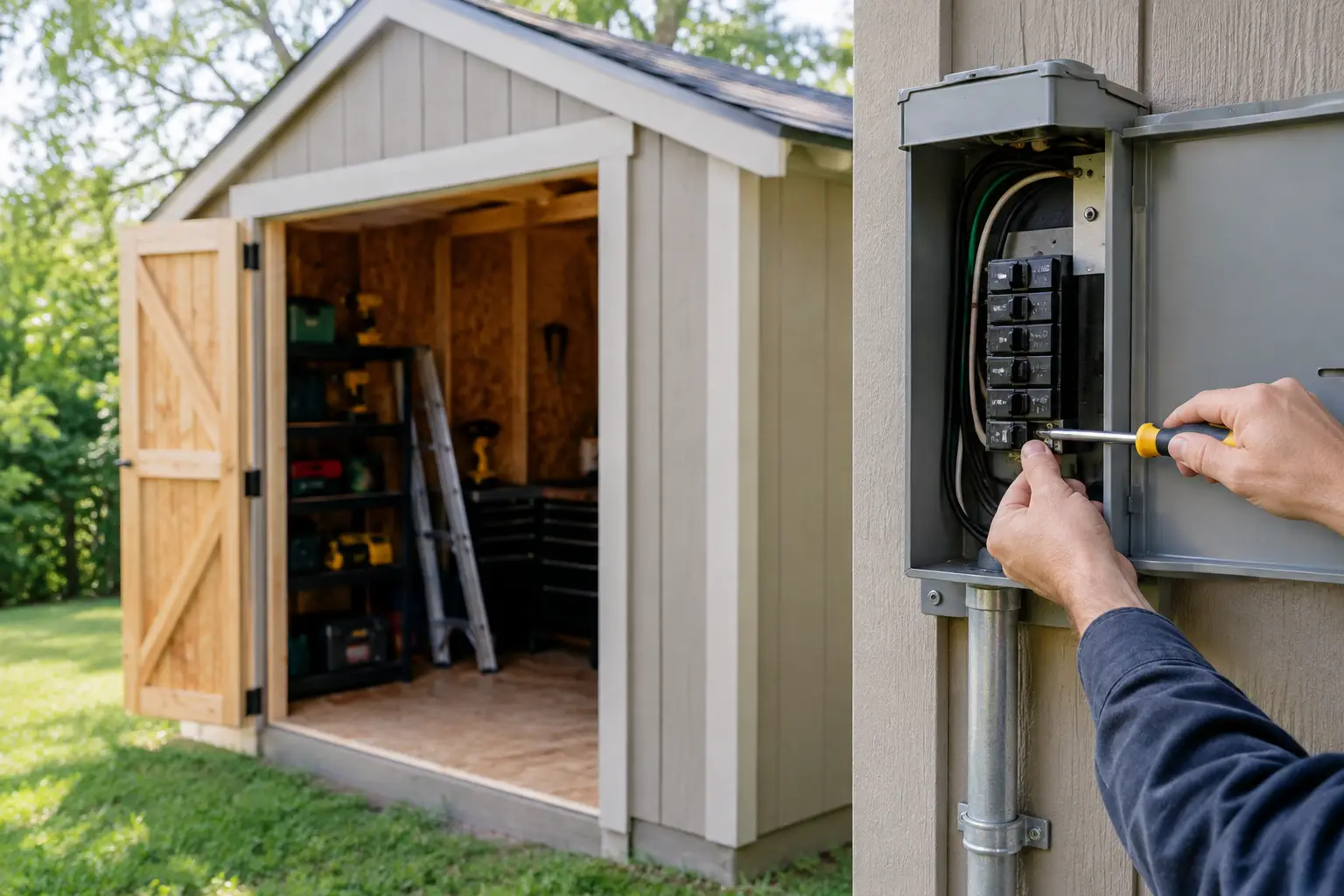
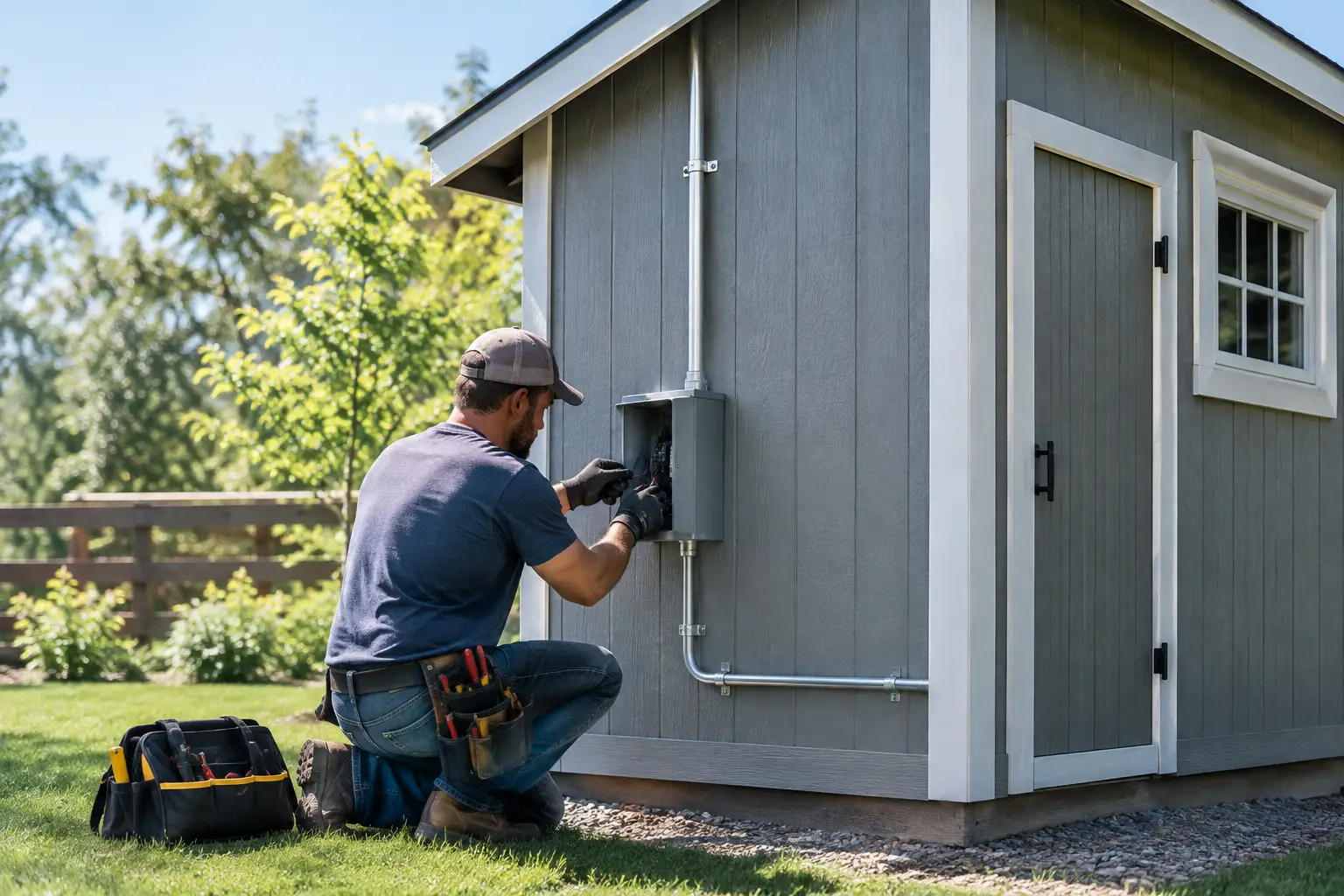
Small Breaker Panel for Shed: What Should You Look For?
A small breaker panel for a shed serves the same basic purpose as a garage subpanel: it distributes electricity to several branch circuits from a central location.
However, a shed may have different electrical requirements from a workshop.
A small storage shed might only need lighting and a few general-purpose outlets. A backyard workshop may need additional circuits for tools, chargers, and other equipment.
Before purchasing a shed breaker panel, consider these features.
1. Number of Breaker Spaces
The number of breaker spaces is one of the most important features to compare.
A compact panel may look attractive, but a model with too few positions can become inconvenient when you want to add another circuit.
Think about your current requirements and possible future additions.
For example, you may initially need separate circuits for lighting and general outlets, but later decide to add a dedicated workbench circuit.
A panel with additional usable spaces can provide more flexibility.
Remember to check the manufacturer’s maximum permitted number of circuits. Some panels have restrictions on tandem breakers and other configurations.
2. Indoor or Outdoor Enclosure
Not every small breaker panel is designed for outdoor installation.
If your panel will be installed inside a dry garage, an indoor-rated enclosure may be appropriate when the location meets the manufacturer’s requirements.
For an exposed outdoor location, look for a panel specifically listed for that environment.
An outdoor-rated enclosure, such as an appropriately rated NEMA 3R model, is commonly used where protection against rain and sleet is required.
Also consider humidity, dust, corrosion, and the possibility of water entering the enclosure.
Never assume that a standard indoor panel can be installed outside simply because it has a metal cover.
3. Breaker Compatibility
Breaker compatibility is another important buying consideration.
Different manufacturers and panel families can use different breaker designs. Even breakers that look similar may not be approved for the same load center.
Before purchasing additional breakers, check:
- The panel manufacturer’s name
- The exact load center model
- The approved breaker families
- The maximum permitted circuit configuration
- The panel’s labeling and installation documentation
Use only breakers specifically identified or listed for the selected panel.
4. Main Breaker or Main Lug Configuration
Small subpanels are available in different configurations.
A main breaker panel includes a main circuit breaker inside the enclosure.
A main lug panel receives its power through main lugs and relies on the appropriate upstream overcurrent protection.
Neither configuration is automatically the best choice for every garage.
For example, a detached garage may need a disconnecting means at the building. A panel with a suitable main breaker may provide that function when the installation is designed and approved accordingly.
The electrician should determine which configuration meets the applicable electrical code.
5. Neutral and Ground Bars
A subpanel generally needs separate neutral and equipment grounding connections.
The neutral bar must remain isolated from the metal enclosure and equipment grounding system in a standard downstream subpanel installation.
The equipment grounding bar is bonded to the enclosure.
Some panels include the required grounding bar, while others require a compatible accessory kit.
Check the manufacturer’s product specifications before purchasing.
For a detached garage or shed, grounding electrode requirements must also be evaluated.
Best Features to Compare in a Small 70A–100A Garage Subpanel
When shopping for a small 70A–100A breaker panel, compare more than its advertised amperage.
The following checklist can help narrow down the options.
| Feature | What to Look For |
|---|---|
| Panel rating | Appropriate bus rating for the planned installation |
| Breaker spaces | Enough usable positions for current and future circuits |
| Main configuration | Main breaker or main lug, as required |
| Enclosure | Indoor or outdoor rating appropriate for the location |
| Breaker compatibility | Approved breakers for the exact panel model |
| Neutral bar | Suitable isolated neutral arrangement |
| Ground bar | Compatible equipment grounding connections |
| Certifications | Appropriate product listing and labeling |
| Dimensions | Enough physical space for the installation location |
| Manufacturer support | Available documentation and replacement breakers |
A compact panel with sufficient breaker spaces and clearly documented specifications is often a better purchase than a larger-looking panel with limited compatibility.
120V Circuits for a Small Garage Workshop
For a small garage workshop focused on everyday equipment, 120V circuits may cover many common electrical needs.
Examples include:
- LED shop lights
- Battery chargers
- General-purpose outlets
- Small power tools
- Workbench equipment
- Garage door openers
Before purchasing a subpanel, make a list of the equipment you intend to use and check its electrical nameplate.
Pay attention to the voltage, current requirements, and whether the manufacturer specifies a dedicated circuit.
Also remember that a panel’s ability to accommodate several 120V branch circuits does not automatically mean the feeder can supply every connected device simultaneously.
The upstream electrical system must have sufficient capacity.
How Many Circuit Spaces Should a Small Garage Subpanel Have?
The number of breaker spaces you need depends on the way you use your garage.
A garage used mainly for storage may need fewer circuits than a workshop with several workstations.
Here is an example of how to organize your electrical planning.
| Garage Area | Electrical Planning |
|---|---|
| Ceiling lighting | Plan an appropriate lighting circuit |
| Workbench | Evaluate a separate receptacle circuit |
| General outlets | Consider the expected equipment load |
| Garage door opener | Check the manufacturer’s requirements |
| Charging station | Evaluate the total connected load |
| Future equipment | Reserve additional panel spaces |
This is a planning checklist, not a universal wiring layout.
The final number of circuits and their ratings must be determined according to the actual electrical loads and applicable code requirements.
When comparing panels, look at the number of full-size breaker positions and any approved tandem-breaker options. Never assume that every panel accepts tandem breakers.
Attached Garage vs. Detached Garage: Does It Matter?
Yes. The distinction can affect the installation requirements.
An attached garage is part of the same building as the house. Its subpanel is typically supplied from an upstream panel within that building.
A detached garage or shed is a separate structure. Feeding electricity to a separate building can introduce additional requirements involving disconnecting means, feeder conductors, grounding electrodes, and wiring methods.
For a detached structure, the installation generally needs a properly designed feeder with separate neutral and equipment grounding paths.
The neutral must remain isolated from the equipment grounding system at the downstream panel.
A local disconnecting means is also required in applicable detached-building installations, subject to the relevant code provisions and exceptions.
These details are particularly important when choosing between a main breaker and main lug panel.
Have a qualified electrician verify the design before purchasing equipment.
Common Mistakes When Buying a Small Garage Breaker Panel
A few purchasing mistakes can lead to unnecessary expenses or an unsuitable electrical installation.
1. Confusing panel amperage with available electrical capacity
A 100A-rated load center does not automatically provide 100 amps from your home’s electrical service.
2. Choosing a panel with too few breaker spaces
A compact enclosure may save space initially but become inconvenient when you add more circuits.
3. Buying an indoor panel for outdoor installation
Always verify the enclosure rating and manufacturer’s approved installation locations.
4. Assuming all breakers are interchangeable
Use only breakers approved for the exact load center.
5. Forgetting neutral and grounding requirements
A downstream subpanel generally requires an isolated neutral and a separate equipment grounding bar.
6. Ignoring detached-building requirements
A separate garage or shed may need a local disconnect and grounding electrode system.
7. Purchasing based only on price
A low-priced panel may not include the required grounding bar, accessories, or enough breaker positions for your intended installation.
8. Assuming a larger panel increases available power
The feeder and upstream electrical service determine the actual available capacity.
Safety: What Should an Electrician Check Before Installing a Garage Subpanel?
Installing a garage subpanel involves electrical work that can cause electric shock, fire, or equipment damage when performed incorrectly.
Before purchasing or installing the panel, have a qualified electrician evaluate:
- The existing electrical service capacity
- The calculated garage electrical load
- The feeder rating and overcurrent protection
- The panel’s bus rating
- The feeder route and distance
- The enclosure and mounting location
- Breaker compatibility
- Neutral and equipment grounding arrangements
- GFCI protection requirements for garage receptacles
- Local permit and inspection requirements
Garage receptacles generally require GFCI protection under applicable NEC provisions. The exact requirements depend on the adopted code edition and local amendments.
The National Electrical Code is an important reference for residential electrical installations in the United States, but local jurisdictions determine which edition and amendments apply.
Do not work on energized electrical equipment. Have the installation performed and inspected as required by local regulations.
Frequently Asked Questions About Small Garage Subpanels
What is the best small subpanel for a garage?
The best small subpanel depends on the electrical load, number of required circuits, available feeder capacity, and installation location.
Compare 60A, 70A, and 100A-rated options based on their actual specifications rather than choosing the highest advertised amperage.
Is a 60-amp subpanel enough for a small garage?
A 60-amp feeder may be sufficient for a basic garage with lighting, general outlets, and smaller equipment.
However, the actual electrical load must be calculated before selecting the feeder and protective devices.
Is a 70-amp subpanel good for a garage?
A 70A-rated panel may work for certain small garage installations. Check the bus rating, available breaker spaces, main configuration, and manufacturer specifications before buying.
Can I install a 100-amp subpanel in a small garage?
Yes. A 100A-rated load center can be used in a small garage when its feeder, overcurrent protection, and installation are properly designed.
It does not automatically mean that 100 amps of additional electrical capacity are available.
What is the difference between a 70A and 100A subpanel?
The difference depends on the actual product ratings and configuration.
When comparing the two, look at bus capacity, breaker spaces, main breaker options, approved breakers, and enclosure specifications.
Can I use a small breaker panel in a shed?
Yes. A suitable load center can distribute electricity to shed lighting, outlets, and other equipment.
For a detached shed, the feeder, disconnecting means, grounding electrode requirements, and outdoor exposure must be considered.
Does a garage subpanel need a main breaker?
Not necessarily.
A main lug panel may be suitable when the required overcurrent protection and disconnecting means are provided elsewhere. The correct arrangement depends on the building and installation requirements.
Can a 100-amp subpanel be fed by a 60-amp breaker?
It can be possible when the panel is listed for the application and the feeder and protective devices are correctly selected.
The 100A rating describes the panel’s rating, not the actual capacity supplied by the 60A feeder.
Should I choose a main lug or main breaker subpanel?
That depends on the installation.
A main lug panel may be appropriate when upstream protection and required disconnecting means are provided. A main breaker configuration can be useful when a disconnect is needed at the panel location.
Have an electrician determine which option meets the applicable code.
Final Thoughts: Choosing the Right Small Subpanel for Your Garage
A small subpanel for a garage can make it easier to organize lighting, outlets, workbench circuits, and other electrical equipment.
Before choosing one, compare the panel rating, available breaker spaces, main configuration, enclosure type, and approved breaker compatibility.
For a basic garage installation, a 60A feeder may be worth evaluating. If you want more flexibility in the panel itself, a 100A-rated load center supplied by a properly designed feeder may also be an option.
A 70A-rated panel can be considered when its specifications match the project.
The most important thing is to select a panel that matches the actual electrical requirements rather than buying one based on amperage alone.
A little planning before purchasing can help you avoid an undersized panel, incompatible breakers, or an unnecessary electrical upgrade.


Leave a Reply