
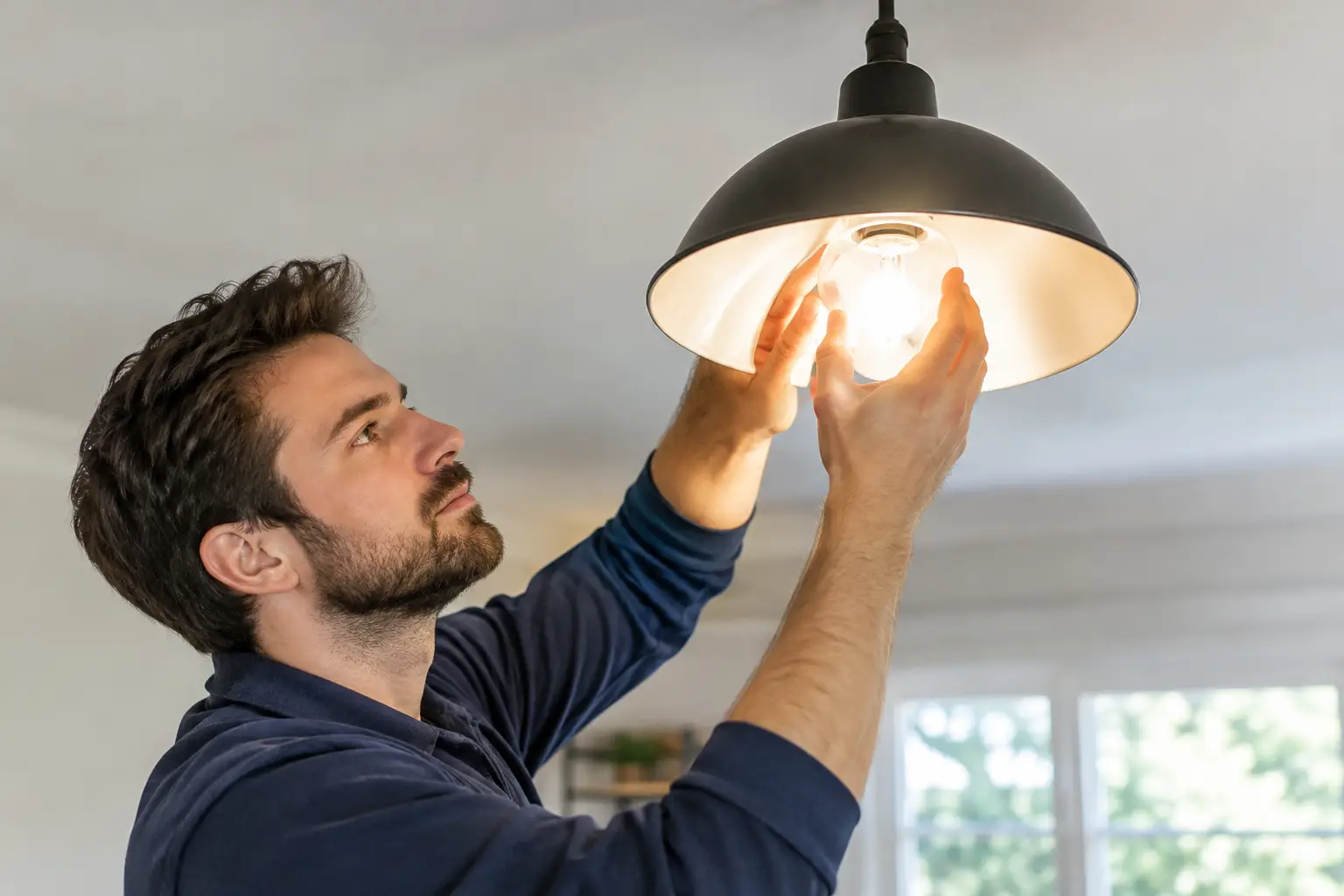
Flickering lights in a shed can make it difficult to work, especially when you’re using power tools, charging batteries, or working after sunset. Sometimes the problem is as simple as a loose LED bulb. Other times, it can point to voltage fluctuations, an overloaded circuit, a faulty connection, or an issue with the electrical supply feeding your shed.
The first step is figuring out whether the problem affects one light, several lights, or the entire building. You should also pay attention to whether the flickering starts when you turn on an electric heater, air compressor, table saw, or another piece of equipment.
These details can help narrow down the cause without randomly replacing bulbs or electrical components.
In this guide, I’ll explain the most common reasons shed lights flicker, what you can safely check yourself, and when it’s time to call a licensed electrician.
Why Are My Shed Lights Flickering?
Shed lights usually flicker because of a problem with the bulb, LED driver, dimmer, electrical connection, or power supply. The location and timing of the flickering provide useful clues about where the problem may be.
For example, if only one LED shop light flickers, the fixture or its driver could be failing. If every light in your shed dims when you start a power tool, the electrical supply may be experiencing a voltage drop.
Here are some common causes:
- Loose or failing LED bulbs
- Incompatible dimmer switches
- Defective LED drivers
- Loose electrical connections
- Overloaded circuits
- Voltage drops from long electrical feeders
- Generator or inverter problems
- Moisture and corrosion inside electrical components
Before troubleshooting, determine how many lights are affected and whether the problem happens continuously or only when equipment starts.
| Product | Best Use | Check Price |
|---|---|---|
| Hykolity 4FT LED Shop Light | Replacement LED Lighting | Check Price → |
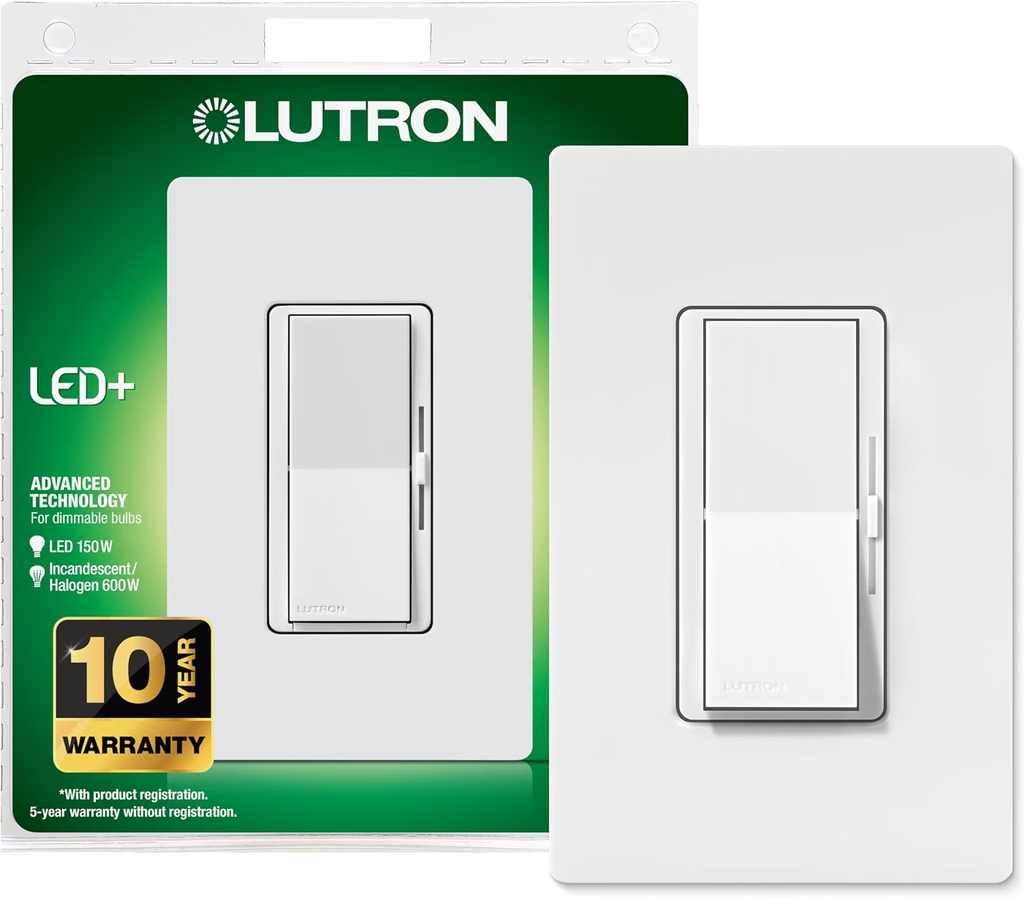
| Lutron Diva LED+ Dimmer | LED Dimmer Compatibility | Check Price → |
| Premier Wire 12-Gauge Extension Cord | Temporary Power Supply | Check Price → |
1. Loose or Defective LED Bulbs
If only one light flickers while the other lights in your shed work normally, start by considering the bulb or fixture.
An LED bulb that is not properly seated in its socket can make intermittent electrical contact. A defective bulb can also produce inconsistent brightness, flash repeatedly, or stop working altogether.
Before touching the bulb, turn off the light and allow it to cool. If it is a replaceable bulb, check that it is properly installed and compatible with the fixture.
You can also try a known-working replacement bulb with the correct base, voltage, and wattage rating.
If the replacement bulb still flickers, the problem may be inside the fixture, socket, wiring, or LED driver.
Some LED shop lights have integrated lighting modules rather than replaceable bulbs. In those fixtures, a failing LED driver may cause the entire light to flicker even when the LEDs themselves are still functional.
2. LED Dimmer Compatibility Problems
LED lights do not work properly with every dimmer switch.
Older dimmers designed for incandescent bulbs may not regulate the lower electrical loads required by LED lighting. This mismatch can cause pulsing, flashing, buzzing, or inconsistent brightness.
If your shed lights only flicker when you adjust the brightness, check whether both the LED bulbs and the dimmer are rated for LED dimming.
A few things to consider:
- Use LED bulbs specifically labeled as dimmable.
- Check the dimmer manufacturer’s compatibility information.
- Make sure the total LED load falls within the dimmer’s rated operating range.
- Replace incompatible controls with properly rated LED-compatible equipment.
For a small shed workshop, a standard on/off switch paired with good-quality LED shop lights is often a simpler arrangement.
If the flickering continues regardless of the dimmer setting, the problem may involve the fixture, wiring, or electrical supply instead.
3. Loose Switches and Electrical Connections
Loose electrical connections are more serious than loose bulbs.
Sheds experience temperature changes, vibration, humidity, and seasonal movement. Over time, these conditions can contribute to deteriorating electrical components or connections.
A worn switch, damaged receptacle, loose terminal, or defective connection can interrupt the electrical supply and cause lights to flicker.
Pay attention to warning signs such as:
- A switch plate that feels unusually warm
- Buzzing or crackling sounds
- Burn marks or discoloration
- A burning plastic smell
- Repeated circuit breaker trips
These symptoms can indicate overheating or electrical arcing.
Do not remove switch covers, open junction boxes, or inspect panel connections while the circuit is energized. If you notice any of these warning signs, stop using the affected circuit and have a licensed electrician investigate it.
A loose electrical connection should never be treated as a minor lighting problem.
Lights Flicker When Power Tools or Heaters Turn On
Another common reason shed lights flicker is a change in electrical demand.
Your shed may have enough electrical capacity to run several LED lights, charge cordless tool batteries, and operate small equipment. However, adding a high-demand appliance can change how the electrical system performs.
Electric motors, compressors, and other equipment can draw considerably more current during startup than during normal operation.
This temporary increase in demand can produce a brief voltage drop, which may cause LED lights to dim or flicker.
Power Tools and Motor Startup
Table saws, air compressors, shop vacuums, and other motor-driven tools can create noticeable startup demand.
For example, you might notice the LED shop lights dim briefly when an air compressor starts. If the brightness returns immediately and the behavior is minor and unchanged, it may be a temporary voltage dip.
However, severe dimming, repeated flickering, or lights that remain unstable after the motor starts should not be ignored.
The problem could involve:
- Excessive voltage drop along the circuit
- A long or undersized electrical feeder
- An overloaded branch circuit
- A weak electrical supply
- A loose or deteriorating connection
A licensed electrician can measure voltage under load and determine whether the circuit and feeder are properly designed for the equipment being used.
Electric Heaters and High Electrical Loads
Electric heaters are another important consideration in small sheds.
A portable heater can draw substantial electrical power for extended periods. If the same circuit also supplies lighting, battery chargers, and workshop equipment, the combined demand may exceed what the circuit is designed to handle.
If your lights flicker when the heater starts or operates, check whether the heater and lighting are sharing the same circuit.
You can temporarily turn off or unplug nonessential equipment and observe whether the lighting becomes stable. Do not use this test as proof that the circuit is safe or adequately sized.
If you are planning to heat your workspace regularly, choose an appropriate electrical circuit for the heater and have the installation evaluated if necessary.
You can also read my guide to choosing a small electric heater for a small garage.
Important: Never install a larger circuit breaker simply because the existing breaker trips or the lights flicker. Breaker ratings must match the wiring, equipment, and circuit design. An oversized breaker can leave the wiring without proper overcurrent protection.
Electrical Supply Problems That Cause Shed Lights to Flicker
If multiple lights flicker together, the problem may not be inside the lighting fixtures.
The electrical supply feeding your shed could be responsible. This is particularly important with detached sheds that receive power through a long underground feeder, generator, or solar inverter.
1. Voltage Drop in a Long Shed Feeder
Detached sheds often sit some distance away from the main house.
Electricity may travel through an underground feeder from the home’s electrical panel to a separate shed subpanel.
The longer the electrical run, the more important proper conductor sizing becomes.
If the conductors are too small for the distance and electrical load, voltage drop can become noticeable when equipment starts operating.
For example, the lights might work normally when the shed is empty but dim when you turn on an air compressor or another high-demand tool.
The correct solution depends on the feeder length, conductor material, wire size, circuit design, and expected electrical demand.
An electrician can calculate the appropriate conductor size and measure voltage at the shed under operating conditions.
Do not attempt to compensate for an undersized feeder by installing a larger breaker.
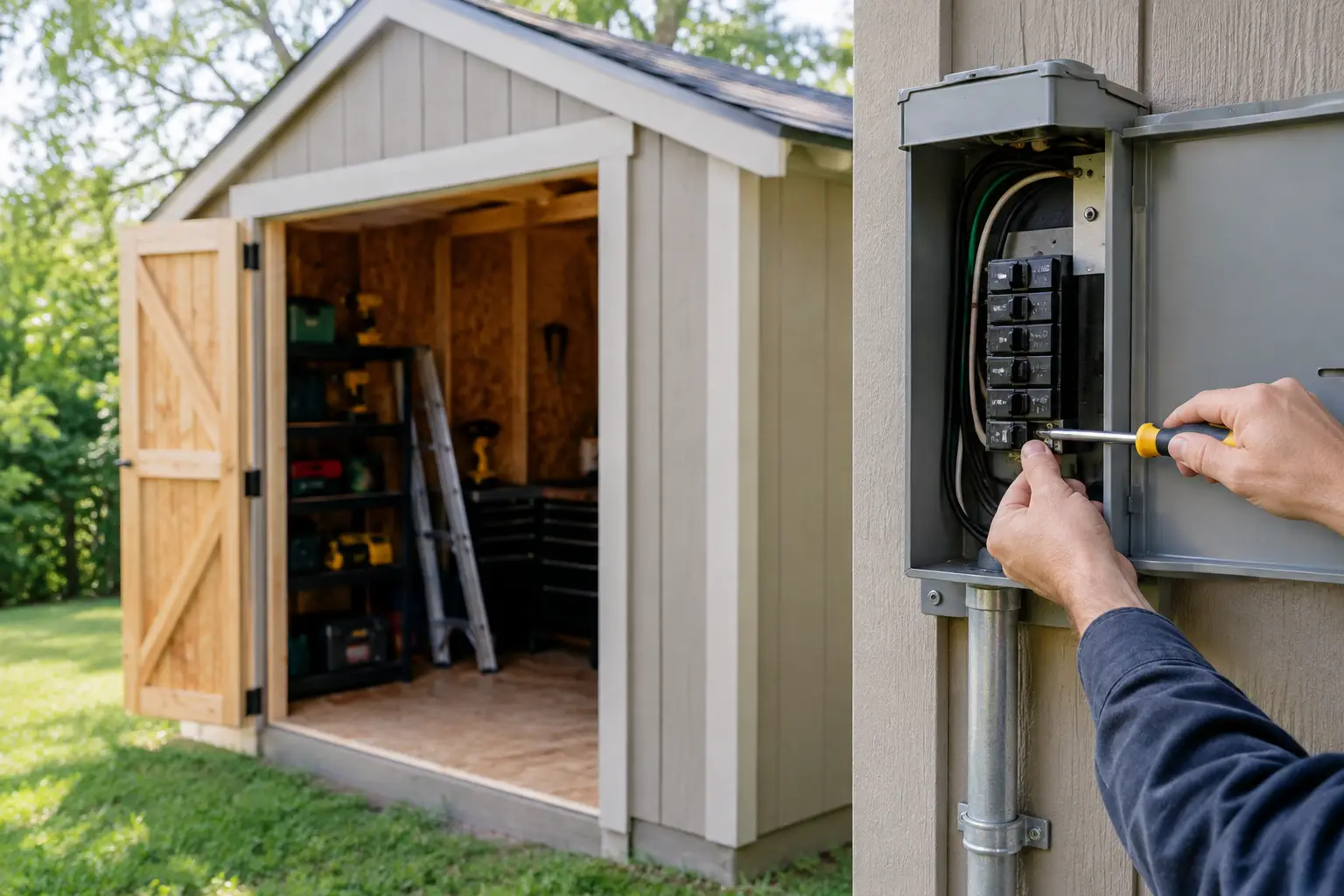
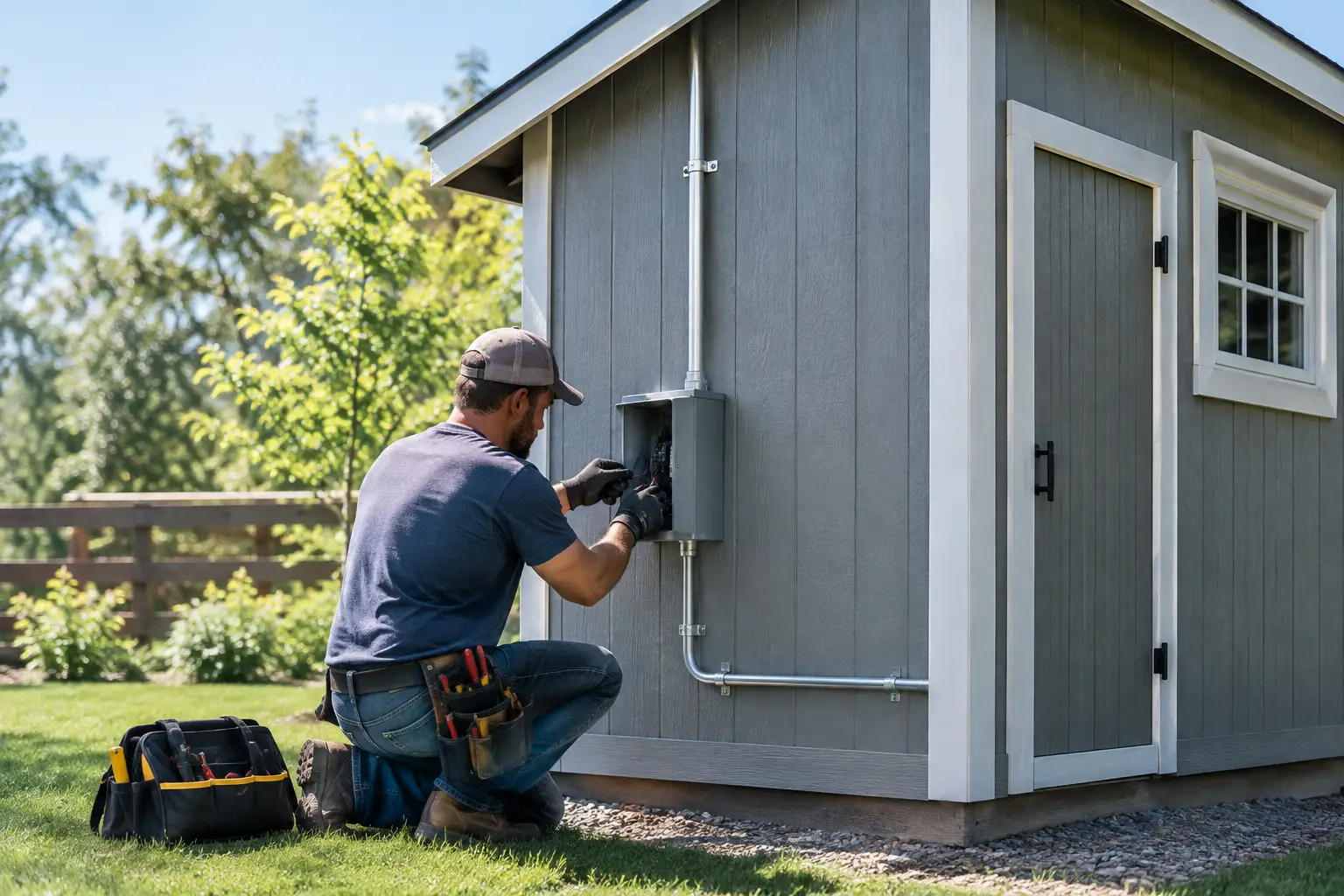
2. Problems With the Shed Subpanel
Some detached sheds have their own electrical subpanel.
A subpanel distributes power to individual circuits serving lights, outlets, heaters, and workshop equipment.
If several lighting fixtures flicker at the same time, possible causes include a problem with the feeder, a faulty breaker, damaged wiring, or a defective electrical connection.
A subpanel that is too small for the planned equipment can also limit future expansion, although insufficient panel capacity does not automatically explain flickering.
If you are building a workshop or upgrading an existing shed, consider whether the electrical distribution system can support your current and expected equipment.
My guide to choosing a small subpanel for a garage explains some of the considerations when selecting an electrical panel for a small workspace.
Have a licensed electrician inspect the panel, feeder, grounding and bonding arrangements, and circuit connections. Do not remove the panel cover or attempt to tighten internal connections yourself.
3. Extension Cords and Temporary Power
Some homeowners power a shed temporarily using an extension cord connected to an outlet in the house.
Although this arrangement can be useful for occasional light-duty work, extension cords are not a substitute for a permanent electrical installation.
A long extension cord with an inadequate wire gauge can experience excessive voltage drop, especially when supplying equipment with higher electrical demand.
This can cause:
- Lights to dim when tools start
- Power tools to operate inconsistently
- Battery chargers to behave unpredictably
- Excessive heating at damaged cords or connections
If you use an extension cord temporarily, choose an outdoor-rated cord with the appropriate conductor size and electrical rating for the connected equipment and distance.
Keep connections dry, avoid damaged cords, and fully uncoil cords when required by the manufacturer’s instructions.
If you regularly use your shed as a workshop, a properly installed permanent electrical supply is a more dependable solution.
Generator and Solar Power Problems
Not every shed receives electricity directly from a home’s electrical panel.
Some small workshops operate using portable generators, solar panels, battery storage, and inverters.
These systems have their own potential causes of flickering.
Generator Voltage Fluctuations
A portable generator can supply enough electricity for shed lighting and small equipment, but performance depends on its capacity, condition, and voltage regulation.
If the generator is operating near its rated capacity, adding another electrical load can cause voltage fluctuations.
Other possible causes include:
- Engine speed instability
- Poor generator maintenance
- Fuel delivery problems
- Defective voltage regulation
- Excessive startup demand from connected equipment
If the lights flicker when a generator-powered tool starts, check the generator’s rated running and starting capacity against the combined electrical demand.
Follow the manufacturer’s instructions for connecting loads and maintaining the generator.
If the generator’s output is unstable, have it inspected rather than continuing to operate sensitive equipment with unreliable power.
Solar Inverters and Battery Systems
Solar-powered sheds depend on several components working together.
Solar panels produce electricity, batteries store energy, and an inverter supplies AC power to conventional lighting and equipment.
If shed lights flicker when using solar power, possible causes include:
- Low battery charge
- An undersized inverter
- Inverter overload
- Poor voltage regulation
- Loose or damaged connections
- Insufficient surge capacity when equipment starts
For example, an inverter may support several LED lights without difficulty but struggle when an air compressor or other high-demand appliance starts.
Check the inverter’s display for overload warnings, low-voltage alerts, or other fault indicators. Consult the manufacturer’s instructions before changing settings.
If you are planning a solar-powered workshop, make sure the inverter and battery system are sized for the actual equipment you intend to operate.
You can learn more in my guide to choosing a small solar panel kit for a shed.
Moisture and Corrosion Can Cause Flickering Shed Lights
Unlike indoor rooms, sheds are frequently exposed to changing outdoor conditions.
Condensation, roof leaks, wind-driven rain, and high humidity can affect lighting fixtures, switches, outlets, and electrical connections.
Moisture can contribute to corrosion and deterioration, creating unreliable electrical contact.
This is especially important in sheds that are not insulated or climate-controlled.
Look for visible warning signs such as:
- Water stains around ceiling fixtures
- Rust or corrosion on exposed electrical enclosures
- Cracked outdoor fixture housings
- Missing weatherproof covers
- Damaged exterior wiring
- Water collecting near outlets or extension cord connections
Use lighting fixtures and electrical enclosures rated for their installation environment.
Outdoor and damp-location ratings are not interchangeable, so choose equipment according to the actual exposure conditions and manufacturer specifications.
If you discover water inside an electrical fixture, outlet, or junction box, turn off the affected circuit if you can do so safely and contact a licensed electrician.
Do not simply dry the component and turn the power back on. Moisture may have damaged insulation or electrical connections even after visible water disappears.
How to Troubleshoot Flickering Shed Lights Safely
Before replacing equipment or calling an electrician, you can collect useful information about the problem.
The following steps focus on observations and simple checks that do not require opening electrical equipment.
Step 1: Determine How Many Lights Are Flickering
Check whether the problem affects one bulb, one fixture, several lights on the same circuit, or the entire shed.
A single flickering light may indicate a bulb or fixture problem. Multiple affected lights suggest that the issue could be farther upstream.
Step 2: Check the LED Bulbs
If the light uses replaceable LED bulbs, turn off the switch, allow the bulb to cool, and check that it is properly seated.
Try a known-working replacement with the correct specifications.
If the fixture continues flickering, the cause may be elsewhere.
Step 3: Check Dimmer Compatibility
If the flickering only happens when adjusting brightness, verify that the LED bulbs and dimmer are compatible.
For integrated LED shop lights, check whether the manufacturer permits dimmer operation at all.
Step 4: Observe What Happens When Equipment Starts
Notice whether the lights flicker when you turn on an electric heater, compressor, table saw, or shop vacuum.
You can temporarily stop using nonessential equipment and observe whether the lighting stabilizes.
Do not repeatedly start equipment to reproduce a serious electrical problem.
Step 5: Inspect Visible Cords and Fixtures
Without removing covers or touching exposed wiring, look for damaged cords, loose external plugs, cracked fixture housings, water exposure, or visible signs of overheating.
Do not touch electrical equipment that is wet, hot, damaged, or producing unusual sounds.
Step 6: Record When the Problem Occurs
Make a note of whether flickering happens:
- When a particular power tool starts
- When the electric heater operates
- During heavy rain or high humidity
- When the generator is under load
- When the solar battery charge is low
- Randomly, without any obvious trigger
This information can help an electrician identify the problem more efficiently.
When Should You Call an Electrician?
Not every flickering light requires an emergency service call, but certain warning signs should never be ignored.
Contact a licensed electrician promptly if you notice:
- Burning smells near lights, switches, or outlets
- Buzzing, crackling, or sparking
- Warm or discolored switch plates
- Repeated circuit breaker trips
- Flickering across multiple circuits
- Lights that become unusually bright as other lights dim
- Water inside electrical enclosures
- Repeated or worsening voltage fluctuations
If there is smoke, active sparking, or an immediate fire risk, keep away from the equipment and contact emergency services. Do not approach or operate electrical equipment to shut it off if doing so would put you in danger.
A particularly concerning symptom is when some lights become unusually bright while others dim. This can indicate a neutral or electrical supply problem that needs prompt professional attention.
A qualified electrician can inspect the feeder, subpanel, branch circuits, connections, and voltage conditions to determine what is actually happening.
Frequently Asked Questions About Flickering Shed Lights
Why do my LED shed lights flicker even when nothing else is running?
Possible causes include a failing LED bulb, defective LED driver, incompatible dimmer, or poor electrical connection. If replacing the bulb does not solve the problem, have the fixture and circuit inspected.
Why do my shed lights dim when I turn on a power tool?
Power tools with electric motors can draw additional current during startup, producing a temporary voltage drop. A brief, minor change in brightness can occur, but severe, repeated, or prolonged dimming should be investigated.
Can an overloaded circuit make shed lights flicker?
Yes. When electrical demand exceeds what a circuit can safely supply, voltage conditions can become unstable and protective devices may trip. However, flickering alone does not prove that a circuit is overloaded. A qualified electrician can evaluate the circuit and connected loads.
Can a bad extension cord cause flickering lights?
Yes. A damaged, excessively long, or undersized extension cord can contribute to voltage drop, particularly when powering equipment with higher electrical demand. Extension cords should not be used as permanent shed wiring.
Why do my shed lights flicker when the generator is running?
Possible reasons include unstable engine speed, voltage regulation problems, generator overload, or excessive startup demand from connected equipment. Check the generator’s load indicators and manufacturer instructions.
Can moisture cause LED lights to flicker?
Yes. Water and condensation can contribute to corrosion, damaged electrical components, and unreliable connections. Any evidence of water inside an electrical enclosure should be treated as a safety concern.
Final Thoughts
Flickering shed lights can come from something relatively simple, such as a defective LED bulb, or from a more serious issue involving wiring, voltage drop, or the electrical supply.
The best approach is to identify how many lights are affected, notice when the flickering occurs, and check the simple causes before assuming that the entire electrical system needs an upgrade.
If the problem involves repeated voltage changes, multiple circuits, overheating, unusual brightness, or damaged electrical components, have a licensed electrician investigate it.
A well-designed electrical system should provide dependable lighting while supporting the tools, heaters, chargers, and other equipment you use in your shed workshop. Fixing the underlying problem is much more important than simply replacing a flickering bulb.

Leave a Reply