
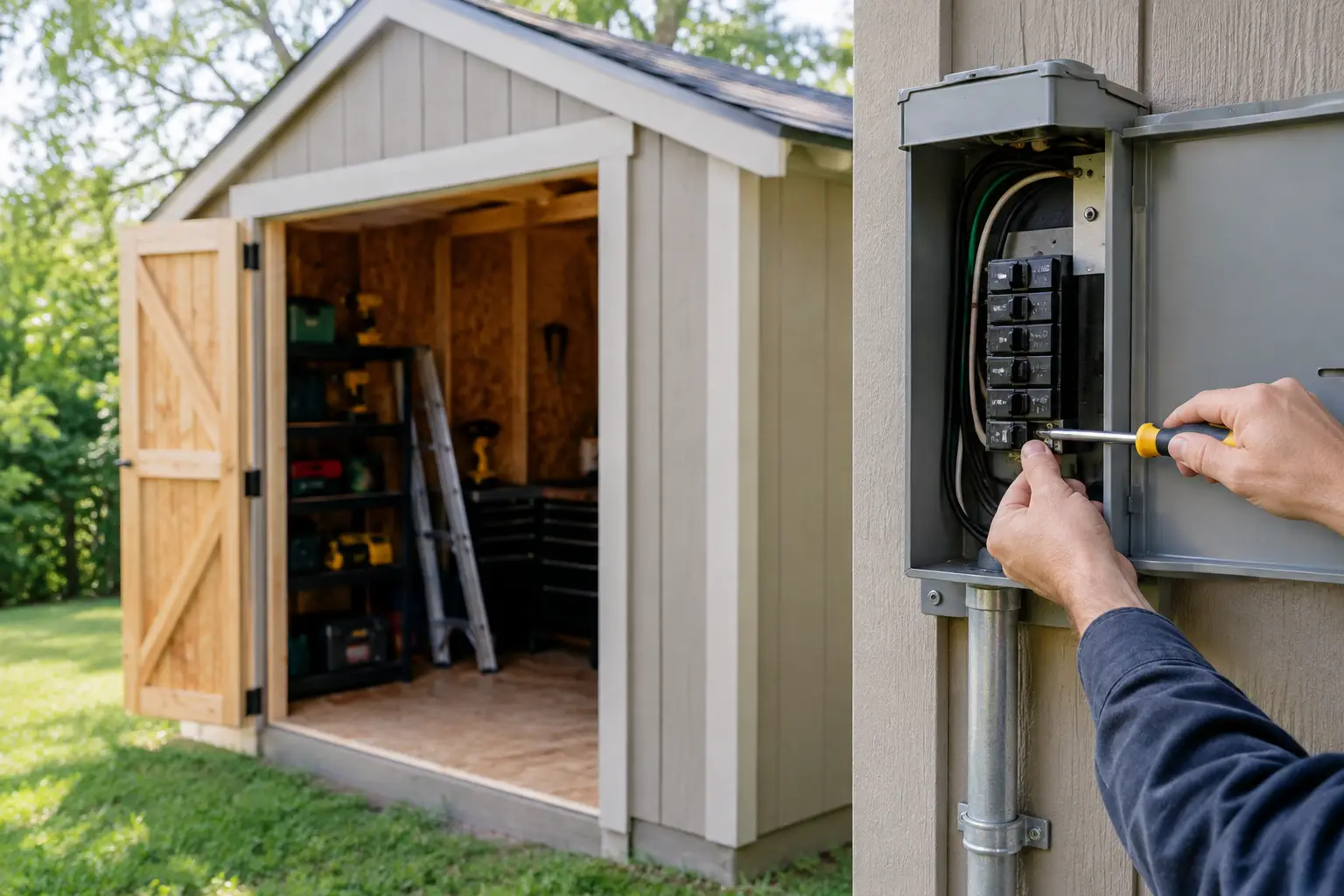
Adding electricity to a small shed makes it much more useful. You can install proper lighting, charge cordless tools, run a small workbench, and use electrical equipment without dragging extension cords out of the house every time you need something.
But before buying outlets, breakers, or electrical panels, there is one important question to answer: How many electrical circuits does your shed actually need?
The answer depends on the size of the shed, the equipment you plan to use, and whether you need ordinary 120-volt power or equipment that requires 240 volts.
A small storage shed with a few lights and battery chargers has very different electrical requirements from a backyard workshop with a heater, air compressor, and power tools.
In this beginner’s guide, I’ll explain how shed circuits work, when a single circuit may be enough, when a subpanel makes sense, and what to consider before planning a permanent electrical installation.
How Many Electrical Circuits Does a Small Shed Need?
There is no universal number of circuits for every shed. A basic storage shed may be served by one properly designed branch circuit, while a small workshop may benefit from two or more separate circuits.
The important thing is to consider the electrical demand rather than simply counting outlets.
For example, a shed used for occasional projects might need:
- One or more LED light fixtures
- A few general-purpose outlets
- Battery chargers for cordless tools
- A small fan or other low-power equipment
These loads may fit within one appropriately designed circuit, depending on their combined demand and the applicable electrical requirements.
A more active workshop could need additional circuits for equipment such as:
- An electric heater
- An air compressor
- A shop vacuum or dust collector
- Larger woodworking tools
- A refrigerator or other continuously operating appliance
Separating certain loads can make the electrical system easier to use and reduce the chance of overloading a circuit.
A dedicated circuit is not automatically required for every appliance. The equipment’s nameplate, manufacturer instructions, expected operating conditions, and local electrical code determine what is appropriate.
For a beginner, the best starting point is to list everything you expect to operate and identify which items may run simultaneously.
That gives you a much better foundation for planning the number of circuits.
Understand the Difference Between a Branch Circuit and a Feeder
Before choosing electrical equipment, it helps to understand two terms that are often confused: branch circuit and feeder.
A branch circuit carries electricity from the final overcurrent protection device, such as a circuit breaker, to the outlets, lighting, and equipment it supplies.
A feeder carries electricity from the service equipment or another distribution panel to a downstream panel or distribution equipment.
This distinction matters when powering a detached shed.
For example, an installation might use a branch circuit supplied directly from the home’s electrical panel. Another arrangement might use a feeder to supply a small subpanel inside the shed.
The second arrangement gives you a separate location for distributing power to multiple circuits.
However, installing a subpanel is not automatically necessary just because the shed has several outlets. The number and type of loads, installation configuration, and applicable code requirements determine the appropriate design.
Understanding these two terms will help you communicate more clearly with an electrician and avoid buying equipment that does not match your project.
120V vs. 240V: Which Power Supply Does Your Shed Need?
Most small sheds begin with 120-volt electricity because it supports many of the products people use in a basic workspace.
Common 120V equipment includes:
- LED lighting
- Cordless tool battery chargers
- Radios and small electronics
- Fans
- Many portable power tools
- Small shop vacuums
For a storage shed or modest DIY workspace, 120V may provide everything you need.
However, some workshop equipment requires 240V power.
Examples include certain:
- Air compressors
- Welders
- Larger woodworking machines
- Electric heaters
- Other high-demand equipment
Always check the equipment’s electrical rating before planning the installation.
A 240V appliance cannot simply be connected to an ordinary 120V receptacle. It needs a compatible supply, correctly rated circuit protection, conductors, and receptacle or connection equipment.
If you think you may eventually purchase 240V equipment, mention that when planning the electrical supply. It can affect the feeder, panel arrangement, and available capacity.
Even if you do not need 240V today, planning ahead can prevent expensive modifications later.
Choose the Right Way to Bring Electricity to Your Shed
There are three common approaches to powering a small shed: a permanent electrical connection from the house, a portable generator, or an independent solar and battery system.
Each option has different advantages and limitations.
1. Permanent Electrical Power From Your House
For a shed used regularly as a workshop, a permanent electrical connection is often the most convenient solution.
A properly designed installation can provide power for lighting, receptacles, chargers, and equipment without relying on extension cords.
Depending on the electrical design, power may be supplied through a branch circuit or a feeder connected to a small electrical panel.
If you plan to distribute electricity to multiple circuits, a small electrical panel may be appropriate.
The main advantage is convenience. You can turn on the lights, plug in your tools, and work without setting up a temporary power source every time.
The downside is installation cost and complexity.
A permanent connection may involve:
- Underground or overhead wiring
- Conduit or an approved wiring method
- Properly sized conductors
- Circuit breakers and disconnecting equipment
- Grounding and bonding
- Permits and inspections
The distance between the house and shed also matters. Longer runs can require additional attention to conductor sizing and voltage drop.
A licensed electrician can evaluate the existing electrical service, calculate the expected load, and determine an appropriate installation.
2. Portable Generator Power
A portable generator can be useful when you only need electricity occasionally or when running a permanent electrical connection is impractical.
For example, you might use a generator to power temporary lighting, charge batteries, or operate selected tools during an outdoor project.
However, generators are not always the most convenient solution for a frequently used shed.
You have to consider fuel, noise, maintenance, runtime, and proper outdoor placement.
Never operate a portable generator inside a shed, garage, or enclosed space. Generator exhaust contains carbon monoxide, which can cause serious poisoning or death.
Keep the generator outdoors, away from doors, windows, and vents, following the manufacturer’s placement instructions and applicable safety guidance.
If you want a generator to supply permanently installed shed circuits, the connection must use properly rated and approved transfer or interconnection equipment. Never connect a generator through an ordinary wall receptacle or improvise a connection that could backfeed the home’s electrical system.
For occasional temporary work, a generator may be practical. For everyday workshop use, permanent power is generally more convenient.
3. Solar Power for a Small Shed
Solar power is another option, especially when your electricity needs are relatively modest.
A small solar installation can provide energy for LED lighting, phone charging, small electronics, and selected low-power equipment.
A compact solar setup for a shed can be a practical starting point for someone who does not need conventional utility power.
A complete system may include:
- Solar panels
- A charge controller
- A battery bank
- An inverter, if you need AC power
- Appropriate overcurrent protection and wiring
The battery and inverter must be compatible with the expected loads.
For example, an electric heater can consume substantial energy over several hours. A small solar installation may not be able to support that demand economically.
Solar works best when you understand how much electricity you use each day and size the system accordingly.
If you plan to install permanent AC wiring, have the system designed to comply with the applicable electrical requirements. Do not connect an inverter directly to a building’s existing circuits without an approved, properly designed arrangement.
When Does a Shed Need a Subpanel?
Not every shed needs a subpanel.
A small storage shed with modest electrical requirements may be served by a properly designed branch circuit. However, a workshop with multiple circuits or different equipment requirements may benefit from a separate electrical panel.
A subpanel receives power through a feeder and distributes electricity to individual branch circuits.
For example, a workshop might have separate circuits for:
- General lighting
- General-purpose receptacles
- A dedicated appliance or tool
- Equipment requiring 240V power
This arrangement makes it easier to manage different loads and provides room for future electrical additions.
Before choosing a panel, consider more than the number of breaker spaces.
You also need to evaluate:
Available electrical capacity: The home’s main electrical service must have enough capacity for the additional demand. An empty breaker space does not automatically mean the service can support another feeder.
Feeder capacity: The feeder must be designed for the calculated load, conductor length, voltage drop, installation conditions, and applicable code requirements.
Panel configuration: The panel must be suitable for its intended location and application. Indoor and outdoor installations may require different enclosure ratings.
Disconnecting equipment: A detached building supplied by a feeder generally needs a compliant means of disconnecting power at the building.
Grounding and bonding: Detached structures have specific grounding and bonding requirements. These must be considered as part of the overall electrical design.
An important detail is that the neutral and equipment grounding conductors generally remain separate in a detached building’s feeder-supplied subpanel. The grounding electrode system and other bonding requirements must also be addressed according to the adopted electrical code.
These are not details to guess when purchasing a panel.
For a permanent installation, have an electrician determine whether a subpanel is necessary and select the appropriate equipment.
Plan Your Shed Outlets and Lighting Before Installation
A well-designed electrical layout makes a small shed easier to use.
Before installation begins, decide where your workbench, tool storage, charging station, and larger equipment will be located.
This helps determine where receptacles and lighting should go.
Place Outlets Near Your Work Areas
If you plan to use the shed as a small workshop, having receptacles near your workbench can save considerable time.
Consider placing outlets where you expect to use:
- Cordless tool chargers
- Handheld power tools
- A small shop vacuum
- A laptop or radio
- Other frequently used equipment
Avoid depending on one receptacle near the entrance to supply the entire workspace.
Also consider the physical environment. Receptacles and electrical equipment should be suitable for the moisture, dust, temperature, and exposure conditions where they are installed.
Outdoor receptacles generally need appropriate weather-resistant equipment and covers designed for the location and intended use.
Plan Lighting Around the Workbench
A single ceiling light may illuminate the center of the shed but leave work surfaces and shelves in shadow.
For a more useful setup, consider combining general overhead lighting with task lighting above the workbench.
LED fixtures are often a practical choice because they provide good illumination with relatively low power consumption.
Place the main light switch near the entrance so you can turn on the lights before walking into the shed.
If you use the shed after dark, exterior lighting near the entrance can also make access easier.
GFCI and AFCI Protection: What Should You Know?
Electrical protection is particularly important in sheds because they may be exposed to moisture, dust, outdoor conditions, and unfinished surfaces.
Two types of protection you may encounter are GFCI and AFCI.
GFCI Protection
A Ground-Fault Circuit Interrupter helps protect people from electric shock by detecting certain differences in electrical current and interrupting power.
GFCI protection is commonly required for receptacles in accessory buildings and other locations covered by the applicable NEC provisions.
Depending on the installation, protection may be provided through a GFCI receptacle or a GFCI circuit breaker.
The exact requirements depend on the adopted code edition, receptacle characteristics, location, and applicable exceptions.
AFCI Protection
An Arc-Fault Circuit Interrupter is designed to detect certain dangerous electrical arcing conditions that could lead to fires.
AFCI requirements depend on the type of building, the branch circuit, and the electrical code adopted by the local jurisdiction.
Do not assume that every detached shed has the same AFCI requirements as every room inside a dwelling.
Your electrician can determine which protections apply to your specific installation.
The important point is to include electrical protection in the original plan rather than treating it as an optional upgrade after installation.
When Should You Install a Dedicated Shed Circuit?
A dedicated circuit supplies a particular appliance or intended load without sharing its circuit capacity with unrelated equipment.
It can be useful when an appliance draws substantial current or when the manufacturer or electrical code requires a separate circuit.
An electric heater is a good example to consider when planning a workshop.
A compact heater may still consume a significant amount of power, particularly when operating for extended periods during cold weather.
If you also operate a shop vacuum, power tools, or battery chargers on the same circuit, the combined demand could exceed what the circuit can safely supply.
Other equipment worth evaluating includes:
- Larger air compressors
- Dust collection systems
- Certain woodworking machines
- Refrigerators
- Equipment requiring 240V
Before purchasing any of these products, check the voltage, amperage, wattage, plug configuration, and installation instructions.
A heater that requires 240V, for example, needs a compatible electrical supply. A standard 120V receptacle cannot provide the required connection.
Planning for these loads before finishing the shed can prevent unnecessary changes later.
Why Extension Cords Are Not a Permanent Electrical Solution
Extension cords are useful for temporary projects, but they should not replace properly installed electrical wiring.
In a shed, cords can become exposed to several hazards:
- Foot traffic
- Lawn equipment
- Pinched doors
- Moisture
- Sharp edges
- Damaged insulation
An undersized extension cord can also overheat when carrying more current than it is designed to handle.
If you need an extension cord temporarily, choose one rated for outdoor use and appropriate for the equipment, current demand, and distance.
Inspect it before use and keep connections protected from moisture.
Avoid connecting multiple extension cords or power strips in a chain to reach distant work areas.
For a workspace you use regularly, permanent receptacles and properly designed circuits provide a cleaner and more dependable solution.
Electrical Permits, Grounding, and Safety Requirements
Adding electricity to a detached shed involves more than installing a few outlets.
Depending on the project and local requirements, you may need an electrical permit, inspection, and professional installation.
The National Electrical Code (NEC) provides the technical framework used by many U.S. jurisdictions, but local authorities adopt specific editions and may introduce amendments.
That means a requirement in one state or municipality may not be identical to the requirement in another.
Before starting a project, check with your local building department or Authority Having Jurisdiction (AHJ).
Pay particular attention to the following areas.
Underground wiring: Burial depth depends on the wiring method, conduit type, location, and applicable code requirements. There is no single burial depth that applies to every installation.
Utility locating: Before digging a trench, contact 811 or your state’s utility notification service. Underground electrical, gas, water, and communication lines may be present even when they are not visible.
Grounding and bonding: A detached building supplied by electrical wiring may require a grounding electrode system and an equipment grounding conductor. The applicable exceptions and installation details must be evaluated.
Disconnecting equipment: A detached structure supplied by a feeder generally needs an appropriate disconnecting means. Its location and configuration depend on the applicable code.
Moisture protection: Electrical boxes, receptacles, covers, and other components must be suitable for their installation environment.
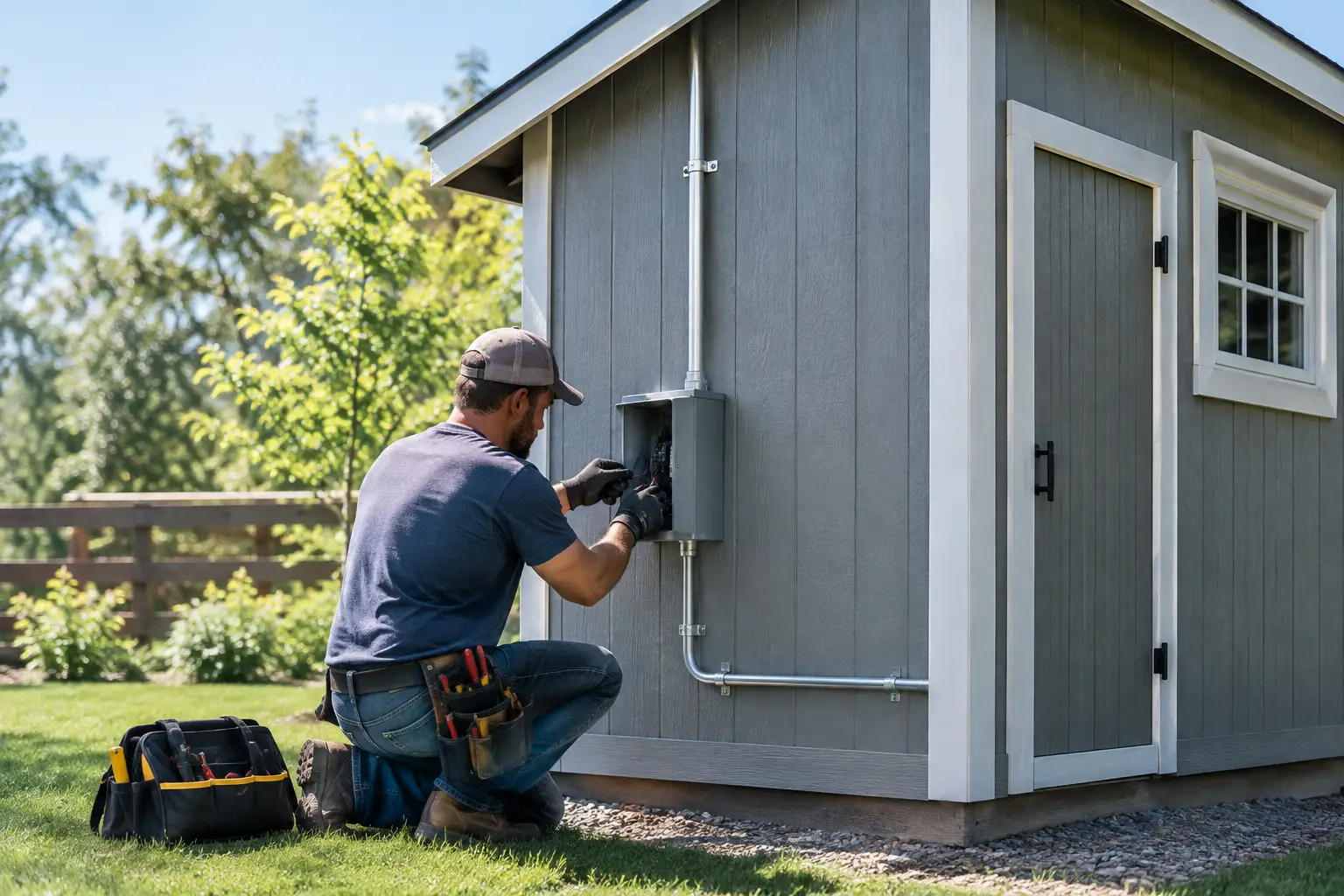
Working inside an electrical service panel, installing feeders, and making connections to the home’s electrical system can expose you to serious hazards.
These tasks should be handled by a qualified, licensed electrician where required by local law.
Final Thoughts: Plan the Circuits Around How You Use Your Shed
The best electrical setup for a small shed is not necessarily the one with the most outlets, the biggest panel, or the largest number of circuits.
It is the one that safely supports the equipment you actually use.
For a basic storage shed, a properly designed 120V branch circuit may be enough. For a small workshop with multiple tools, a heater, or future 240V equipment, additional circuits and a subpanel may make more sense.
Before purchasing electrical equipment, make a list of your expected loads, decide which appliances may operate simultaneously, and consider whether your needs could change in the future.
Most importantly, remember that a detached shed has electrical requirements that are not always the same as adding another outlet inside your house.
A properly planned system makes the space more useful, keeps everyday work convenient, and helps avoid costly electrical changes after the shed is finished.
Leave a Reply